

Google DeepMind has agreed a new three-year strategic partnership with the UK government that will see it open its first fully automated research laboratory in the country and expand collaboration on AI-enabled public services, scientific discovery and security.
The agreement, set out in a Memorandum of Understanding (MoU) with the UK Department for Science, Innovation and Technology (DSIT), is intended to support the UK’s AI Opportunities Action Plan and AI for Science Strategy.
It is voluntary and not legally binding, does not include any financial commitments and is not tied to future procurement decisions.
At the centre of the partnership is Google DeepMind’s plan to establish an automated R&D and lab facility in the UK next year.
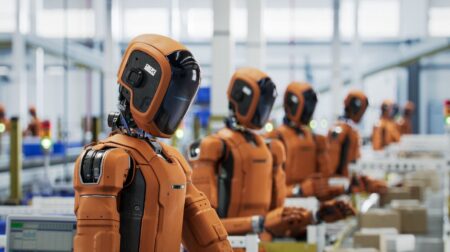
The site will use AI and robotics to run experiments and accelerate research, with full integration into the Gemini AI platform.
Initial work will focus on developing new superconductor materials that can carry electricity with zero resistance, alongside wider materials discovery.
According to the government, advances in superconductors could support lower-cost medical imaging technologies and more efficient computer chips, as well as contribute to cleaner transport systems and progress towards net zero emissions.
Under the MoU, UK researchers will receive priority access to Google DeepMind’s latest AI for science models and tools, including its AI co-scientist system and models such as AlphaGenome, AlphaEvolve and WeatherNext.
Existing tools like AlphaFold, which predicts protein structures, are cited as examples of how AI-driven research has already supported work in areas including crop resilience and antimicrobial resistance.
Demis Hassabis, Google DeepMind co-founder and CEO, said AI has “incredible potential to drive a new era of scientific discovery and improve everyday life”.
He added: “We’re excited to deepen our collaboration with the UK government and build on the country’s rich heritage of innovation to advance science, strengthen security, and deliver tangible improvements for citizens.”
On the public sector side, DSIT and Google DeepMind will explore “Gemini for Government”, a potential AI system designed to reduce bureaucracy, automate routine tasks and free civil servants to focus on service improvements.
Google DeepMind and Google Cloud will also look at use cases for responsible AI adoption across departments, working with the government’s Incubator for AI (i.AI).
In education, the company will seek to develop a version of Gemini grounded in England’s national curriculum and tested against government expectations for safety in schools. It will also support research into the impact of AI on teaching and learning.
The agreement further expands cooperation between Google DeepMind and the UK’s AI Security Institute (AISI).
The parties plan enhanced technical information sharing on frontier AI capabilities, indicators of accelerating AI progress, economic impacts and emerging security risks.
Google DeepMind will provide AISI with priority technical access to its frontier models to support joint research on AI safety, security and societal resilience, and will work with the government on potential AI-enhanced approaches to national cyber resilience, including large-scale threat detection and remediation.
UK prime minister Keir Starmer said the partnership is intended to ensure the UK “harness[es] developments in AI for public good so that everyone feels the benefits”, linking potential applications to cheaper, greener energy and more efficient public services.
Technology secretary Liz Kendall characterised Google DeepMind as an example of UK-US tech collaboration and said the agreement could help unlock cleaner energy, smarter public services and new opportunities across the country.
The MoU takes effect from the date of signature and will remain active for 36 months.
It explicitly states that participation will neither advantage nor disadvantage Google DeepMind in any current or future competitive procurement and that any data shared will be handled in line with UK data-protection law, with no personal data processed without an appropriate data-sharing agreement in place.
Join 400 exhibitors and 11,000 industry leaders at Robotics and Automation Exhibition on 18-19 March 2026 at NEC Birmingham to explore cutting-edge technologies, connect with peers and discover the latest innovations shaping the future of manufacturing, engineering and logistics. Register for free now to secure your place at this unmissable event!